
The Civilian Interview Is Not an Interrogation, It Is a Mission Briefing You Control
Interview | Jun 06, 2026
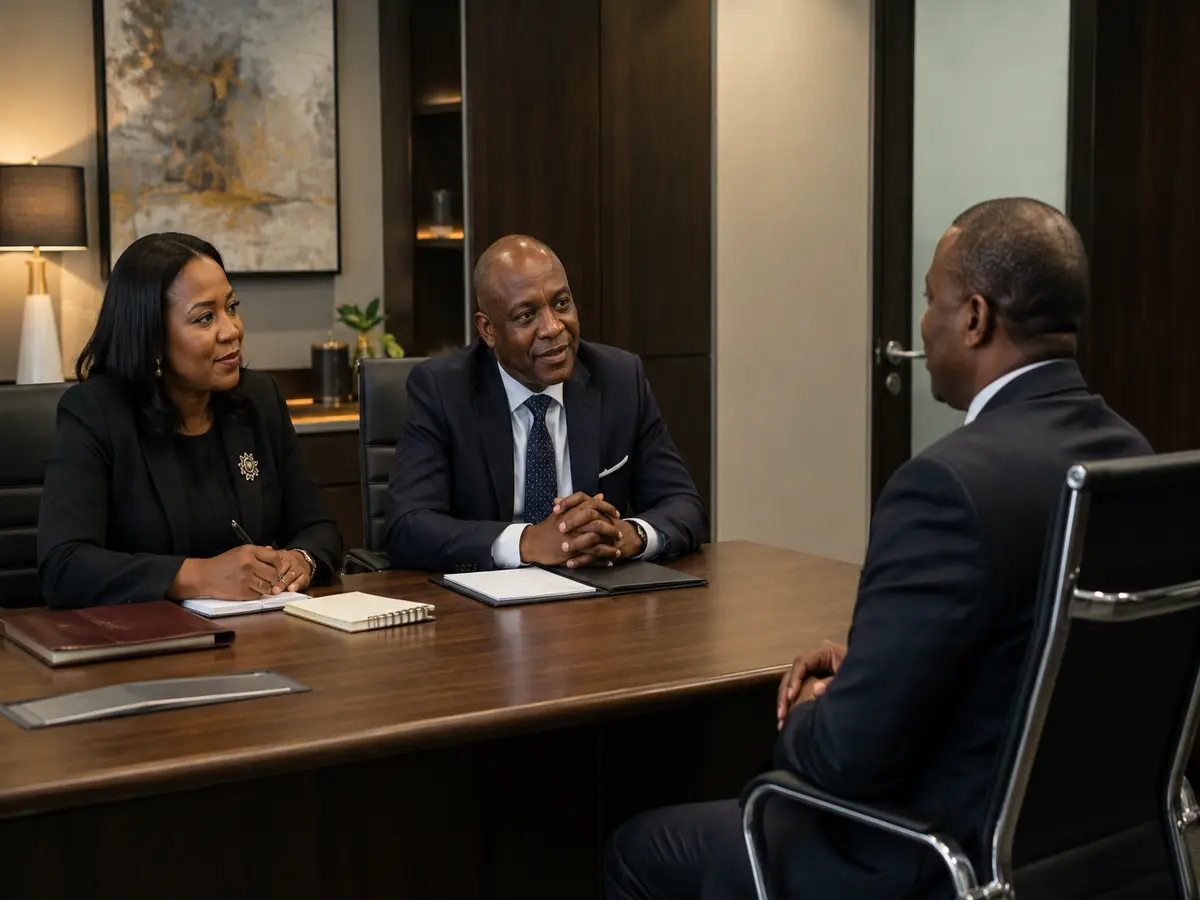
You have survived worse than a job interview. You have made decisions under fire, led men in the dark, managed crises with incomplete information, and delivered results in conditions that would break most people. A room with two civilians and a list of questions should not be the thing that defeats you.
And yet, many Nigerian veterans highly capable, deeply experienced, genuinely qualified walk out of civilian job interviews without an offer. Not because they lacked the skills. Because the interview is a performance format they were never trained for, conducted in a language that doesn't come naturally to them.
This guide changes that.
THE CIVILIAN INTERVIEW: UNDERSTANDING THE TERRAIN
Before any operation, you study the terrain. The civilian job interview has its own terrain, its own rules of engagement, and its own objectives and they are different from what you might expect.
What the interviewer is actually trying to determine:
1. Can this person do the job?
2. Will this person fit into our team and culture?
3. Is this person genuinely interested in this role, or just desperate for any job?
Most veterans answer question one confidently but struggle with questions two and three. Civilian employers worry — often without saying it directly that ex-military candidates will be too rigid, too hierarchical, unable to take feedback from civilian managers who are junior in age, or unable to adapt to unstructured environments. Your job in the interview is not just to demonstrate competence. It is to dismantle those assumptions without ever acknowledging them directly.
THE STAR METHOD: YOUR TACTICAL FRAMEWORK FOR EVERY INTERVIEW QUESTION
The most effective way to answer behavioural interview questions the "tell me about a time when..." questions that dominate modern interviews is the STAR method. Think of it as your operational reporting format for the civilian context.
S — SITUATION: Briefly set the context. What was happening? What was at stake?
T — TASK: What was your specific responsibility in that situation?
A — ACTION: What did you specifically do? (This is the most important part focus on your individual contribution, not what "the team" did.)
R — RESULT: What was the measurable outcome? What changed because of your actions?
The entire answer should take 90 seconds to two minutes. Practice this until it is automatic.
Example:
QUESTION: "Tell me about a time you had to manage a conflict within your team."
WEAK ANSWER (common veteran mistake): "In the military we don't really have conflict. Everyone follows orders and the mission gets done."
This answer, while genuine, raises red flags for every civilian interviewer. It signals inflexibility and a lack of understanding of civilian workplace dynamics.
STRONG STAR ANSWER: "During a joint operation involving personnel from three different units with different command cultures, I noticed growing friction between two senior NCOs that was beginning to affect operational efficiency. I requested a private meeting with each of them separately to understand their individual concerns, then facilitated a direct conversation between them focused on the shared operational objective rather than the personal disagreement. I also clarified the command structure for the operation in writing so there was no ambiguity about decision authority. The tension resolved within 48 hours and the operation concluded successfully. What I learned from that experience is that most conflict comes from unclear expectations a lesson I apply in every leadership context."
Notice what that answer does: it demonstrates emotional intelligence, conflict resolution skill, written communication, and leadership all without mentioning ranks, military jargon, or sounding rigid.
THE QUESTIONS YOU WILL DEFINITELY BE ASKED AND HOW TO ANSWER THEM
"Tell me about yourself."
This is not an invitation for your service history. It is a 90-second professional summary. Start with what you are professionally. Move to what you achieved. End with why you are in this room. Practice this until it flows naturally.
"Why are you leaving the military / why did you retire?"
Never speak negatively about the military. Frame your transition as a deliberate, forward-looking choice. "After 24 years of service and reaching the peak of my operational career, I made the decision to bring that experience to the private sector, where I can continue to build organisations and develop people in a new context."
"What is your greatest weakness?"
Do not say you are a perfectionist. Do not say you work too hard. Choose a genuine area of development that is not critical for the role, and this is important show what you are actively doing to address it. "I spent most of my career in structured command environments, so I have been intentional about developing my comfort with the more fluid decision-making style of civilian organisations. I have been doing this by attending management seminars and actively seeking feedback from civilian mentors since my retirement."
"Where do you see yourself in five years?"
Align your answer with the company's evident direction. Show ambition that is realistic for the role you are applying for. Veterans sometimes undersell here (too modest) or oversell (claiming to want the CEO's job in year two). The right answer shows growth motivation, loyalty, and role-specific ambition.
"Why do you want to work for this company specifically?"
This question separates serious candidates from desperate ones. You must research the company before the interview their products or services, their recent news, their stated values, their key challenges. Veterans who prepare this answer thoroughly make an immediate impression because most candidates do not bother.
FIVE THINGS TO DO IN THE 48 HOURS BEFORE YOUR INTERVIEW
ONE Research the organisation thoroughly. Understand what they do, who their clients are, what challenges they face, and what they publicly value. Find any recent news about them. This preparation directly answers the "why us" question and shows seriousness of intent.
TWO Re-read the job description and identify the three to five most important skills or qualities the role requires. Prepare a STAR story for each of those requirements. These are the answers you will need.
THREE Prepare three intelligent questions to ask the interviewer. Strong questions: "What does success look like in this role in the first six months?" "What are the biggest challenges the team is currently facing?" "How would you describe the management style of the person this role reports to?" Weak questions: "What is the salary?" (save that for after an offer) or "How many days of leave do I get?"
FOUR Plan your logistics. Know exactly where you are going, how long it takes to get there, and arrive ten to fifteen minutes early. Showing up late even for reasons beyond your control is a signal that many civilian employers do not forgive.
FIVE Dress appropriately. For most professional roles in Nigeria, this means a well-fitted suit or formal business attire in a conservative colour. Your clothes should not be a distraction. They should simply communicate that you take this seriously.
YOUR POSTURE IN THE ROOM
Veterans tend toward one of two interview extremes: either excessively formal (rigid posture, clipped yes/no answers, minimal eye contact as if addressing a superior) or overexplaining (delivering every answer as a full operational briefing). Neither works in a civilian interview.
The tone you are looking for is confident and conversational. Lean slightly forward. Make consistent (not intense) eye contact. Smile where appropriate. Ask for clarification if a question is unclear rather than guessing at the answer. If you do not know something, say so directly "I don't have specific experience with that, but here is how I would approach learning it quickly."
The civilian interviewer is not your superior. They are not your subordinate. They are a potential partner evaluating whether you are the right person for a role. Treat the conversation accordingly.
AFTER THE INTERVIEW
Send a brief, professional follow-up email within 24 hours thanking the interviewer for their time, referencing one specific topic you discussed, and reaffirming your interest in the role. Most candidates do not do this. It takes five minutes and it is remembered.
If you do not get the offer, request feedback where possible. Every interview you do not get is intelligence for the next mission. Debrief yourself. Identify what went well and what needs adjustment. Adapt your approach.
You have been trained to improve through repetition and feedback. Apply that same discipline here. The interview is a skill. Skills can be learned.
← Back to Interview Resources